28 May 2016

Alive Again in Pátzcuaro (With Photos)

Ah, historic Pátzcuaro! Promoted by the tourism secretariat as a Pueblo Mágico, it is a magical place, with a long history going back to the early 1300s, when the local indigenous people, the purépechas, founded it a couple hundred years before the Spaniards arrived in 1522.

While Jamie has known Pátzcuaro since 1969, the two of us first came here together in the spring of 1993. We had been traveling together as friends on a Big Mexican Adventure in an old Volkswagen van when we first came here. On that first visit, we met some people with whom we have remained good friends throughout the years; and despite Jamie announcing to me, one afternoon on an exploratory drive around the lake, that he was “done with women!” (at the tender age of forty-six), something about this place caused us to begin falling in love…

21 May 2016

A Way-Too-Short Visit to Bogotá, Colombia (With Photos)

During the wee hours of 21 April, 2016, Jamie and I flew LAN from Montevideo, Uruguay, to Bogotá, Colombia, with a short stopover in Lima, Peru, arriving to a lovely day in the Colombian capital, all snuggled up against a line of intensely green mountains to the east, around noon.  Following a minor adventure in which we ended up way out in the parking lot with all our baggage falling off the cart after Jamie’s doubts about going farther and farther away from the taxi lineup won the day and we told the guy pushing our cart that we were going back, our taxi ride across town gave us an impression of a surprisingly clean large city with many green spaces – parks, paths, and bike lanes teaming people out enjoying them.

When we arrived at our little apart-hotel, the Viaggio Virrey, I was exhausted, having been up since 6:00 the previous day frenziedly cleaning, tying up loose ends, and then executing the first stage of our migration back to the Northern Hemisphere with just a few little naps on the plane rides across the South American continent. But we had an hour until check-in, and we had eaten nothing but ham and cheese sandwiches ever since the bus terminal in La Paloma, so we decided to get a bite to eat and see if we could find a grocery store. Happily, there was a big, fancy, upscale store close by, and it had a cafeteria-style restaurant upstairs called La Terraza. Well, La Terraza was very busy, and in our discombobulated state of being, we were trying to figure out how the system worked when the woman we were asking suggested we try a plate of rice mixed with multiple types of meat, beans, veggies, and corn that also came with an arepa and a piece of pork skin… I think – comida colombiana. Melting into putty in her hands, we let her serve us each way too much of the rice plate filled with unknown meats, then Jamie needed help finding the right Colombian bills to pay at the register (the exchange was around 2,900 Colombian pesos per US dollar). The place was really noisy (we got up and moved after identifying the nearby soda refrigerator as the source of one of the loud noises), the meat and beans were way overcooked and dried out, and we were too tired to mess around with trying to figure out what it was about the little cornmeal cakes and the pork skins that had the woman so enthused, so we just shoveled down what we could and then headed downstairs to check out the grocery store. And, oh man, what a store! We would be back later to peruse the aisles and bask in the glory of having so many choices available, from the beer selection to the wall of coffee to the array of herbs and spices from around the world to the wonderful variety of beautiful produce.

15 May 2016

Reflections Upon Leaving Uruguay

After several days of heavy rains, we were fortunate enough to have a sunny day on 20 April when we cleaned ourselves out the doors of our little house in el campo outside of La Paloma, Rocha, Uruguay, settled up with everyone we had sold or traded all our stuff to, said goodbye to our friends, and took a taxi to the terminal to ride the bus to the airport and leave in the early hours of 21 April, exactly seven years and a day after we left the United States for South America.

I had been content to live the simple life in Uruguay, making do with what we had. I loved the sound of the chattering parrots in the trees all around us and of the waves of the Atlantic Ocean hitting the shore in the distance. But it was hard for Jamie there, as we were a couple of kilometers away from the center of town, while the nearest beach was probably more than half a kilometer, and with the pain in his feet and legs he has been suffering, he was pretty much limited to the block of Barrio Parque that consisted of our house at one corner and the little neighborhood store at the other, with a trip to town requiring taxi rides there and back. We had been going out to eat in town about once a week, to break up the monotony of my cooking (Was it just me, or had the quality of the produce available around town been growing continually more shitty as time went by?); but even that was getting old because, other than the fancy, expensive Bahia, the obvious choice for special occasions, the few restaurants that stayed open throughout the year all served the same uninspired menu.

02 February 2016

The Big Deal about Big History

R.I.P. David Bowie (8 January 1947 – 10 January 2016)You are among the most creative, beautiful, and positively impactful human beings
who ever lived!

Edit: Before anyone gets their hopes up, please note that this article has absolutely nothing to do with David Bowie, except ever so subtly, at the very end. I just couldn't let his death go unacknowledged.

The brainchild of David Christian at Macquarie University in Sydney, Australia, Big History is all about connecting knowledge—which is right up my alley, with my whole connectivity thing.

Big History is the story of everything. It’s a way of looking at how reality as we know it developed from the beginning of time, itself, that joins the theoretically modeled mechanical explanations used in the physical sciences with the empirically based social science of history. It’s a cosmological mapping of one historical continuum—an all-encompassing origin story for the 21st century. It’s the unifying force of a single narrative that says, “We are the universe looking back on itself.”

02 January 2016

A New Year's Jaunt

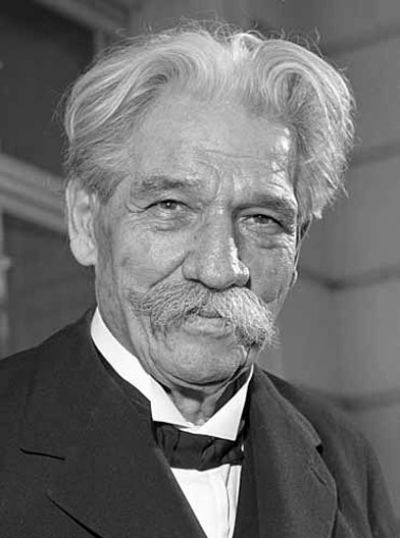
Dr. Albert Schweitzer | Image via Wikipedia

Our House in Barrio Parque

It’s 1 January 2016.

I’m in my house in Barrio Parque, La Paloma, Uruguay, surrounded by Uruguayans who’ve come mostly from the departmental capital of Rocha to flock to the beach while I continue with the day-to-day struggles of life. This barrio is over on the opposite side of Cabo de Santa María from where the center of La Paloma is located. We´re farther from the beaches—La Aguada, Costa Azul, Antoniópolis, and Arachania—than we were when we lived in town, so we don´t get over there too much. But I can always hear the ocean from our second-floor balcony. I love the way that sometimes, it´s the waves crashing on the beaches over on the far side of the cape, sometimes it´s from the near side, and sometimes, I get it in surround sound.

And then there´s the night sky… We´re coming up on the time of year when the Southern Cross shines right into my house after nightfall, lighting my way up the stairs through the sliding glass door on the landing—how awesome is that!

28 December 2014

Joaquín Torres García vs. Ayn Rand: A Unique Profile of the Uruguayan National Character


Introductory Note

Another year has passed, during which I, unfortunately, have been too busy making the money I need to survive to engage in what I really love to do. Don’t get me wrong—I enjoy my current writing and editing work, and I am very thankful to have the opportunity to do it. But it takes up all my energy. Perhaps the new year will bring me to a place where I can once again do the writing that truly moves my spirit and feeds my soul.

02 December 2013

Imagine: Religion as Social Reform - Reza Aslan, Iran, and Religious Faith

Reza Aslan


La Paloma, Uruguay
So, the holiday season is upon us. It always sneaks up on me, here in the Southern Hemisphere, where springtime is awakening into summertime. It doesn’t help that I live in a summer resort town, where the bigger issue is the launch of the holiday season that will rain a deluge of beachgoers onto the usually solitary sands of the lovely, if rather windy, shores of La Paloma. Plus, the Catholicism that infuses Latin American culture is not nearly as ubiquitous in Uruguay, and this country’s clearly defined separation of church and state also tempers the Christmas holiday atmosphere. Besides, not since childhood has Christmas been a holiday that I can get into, anyway, given my distain for the crass commercialization and hyper-consumerism that surrounds it in the States. Well, that, plus I am an atheist who feels a bit hypocritical celebrating something I don’t believe in, although I can dig the idea of celebrating family togetherness and the joy that so many other people get out of the whole thing for their own sakes. Oh, but there’s so much more emotional baggage involved in my attitude toward Christmastime, including memories of that one really difficult Christmas that preceded my mother’s death from breast cancer by about a month, all those years ago...

08 September 2013

From "I have a dream" to "I will seek authorization for the use of force"

From "I have a dream" to "I will seek authorization for the use of force," the final week of August 2013 was an intense one.

"I have a dream"

We had the 50th Anniversary of the March on Washington reminding us of how far our nation has and hasn't come in achieving race equality, putting us in a self-reflective mood and highlighting the conflict between those who climbed up and, as a part of the establishment, are now standing on the shoulders of Dr. Martin Luther King Jr. and other heroic civil rights advocates versus those who see such leaders as sellouts rather than as examples of the movement's successes.

Fifty years is not much time, in the grand scope of things; yet, because of the increasingly accelerated speed of change in modern society, it constitutes a huge generational gap in which the synergy of King's life and work has become subtly diluted.

11 July 2013

Eward Snowden Strange Love, or How I Haven't Learned to Stop Worrying and Love the Bumb

This Snowden NSA leak saga is doing strange things to me.

For starters, it has me obsessed. This real-time spy thriller has me scanning through the Internets, searching for the latest news and looking for any and all information about this snowy-white computer whiz kid that I can dig up. I want to know everything.

Freedom of information

I want to know more details about Snowden's life, like when he switched from believing that whistle blowers were traitors to believing that they are heroes.

I want to know the details of his military service, along with what Snowden's opinion might be about the fact that the US Army is declining to release his records. Would he condemn the government's refusal to reveal the truth, or would he applaud the government's respect for his right to privacy?

I want to know why the initial sensational reports by both The Guardian and The Washington Post about the PRISM Internet surveillance program had gotten the details of the NSA's access to information wrong, erring, of course, on the side of sensationalism.

11 June 2013

Secrecy, Scandals, and Snowden

This is a bit contrary to the usual progressive stance on the latest NSA data collection revelations. Although I believe that the legal system that is in place might very well be infringing on our Fourth-Amendment rights, I don't see a major scandal here. Rather, I see an opportunity highlight the danger of excessive secrecy.

Back in September 2008, after giving birth to by book, No Stranger To Strange Lands, had sadly come to an end, I felt like the only way to rid myself of a sense of post-partum depression was to keep writing, indulging myself in writing an undisciplined screed titled Secrecy, Democracy,and Fascism: Lessons From History. Having been watching a lot of episodes of House, the theme was to discover the disease that was manifesting itself as through the unfortunate symptom of runaway conspiracy theories and, I was arguing, unwarranted distrust of the government. "Mis-diagnosing the disease, "I wrote, "can be as bad or worse than just ignoring it." I was deeply troubled by such issues as Karl Rove's plan to politicize the judiciary and create one-party rule, Dick Cheney's penchant for secrecy and his abuse of power in lashing out against Joe Wilson for outing the administration's flawed argument for going to war in Iraq, and George Bush's excessive use of signing statements, and I decided to take a look at what critical terms Like "tyranny" and "fascism" that were being bandied about really meant — what it was that our failing democracy was becoming. The issue of secrecy seemed to me to be one of the greatest forces eroding at democracy, which depends upon informed citizens to function properly. Secrecy also erodes trust, and a crisis in trust can turn into an earthquake, catastrophically tearing apart the foundation of democracy.

23 April 2013

Richie Haven's Magic Lives On


Sad news: Richie Havens died yesterday, 22 April, 2013. I am so glad to have had a chance to see him perform. I can truly say that Richie Havens touched my life deeply with his passion and beauty. Here is an article I wrote about the experience, which was about a month before Jamie and I flew to Buenos Aires to begin our South America adventure.

Richie Havens Magic
March 2009
Valdosta, Georgia, USA

Richie Havens performed along with an accompanist on guitar at the Suwannee Springfest back in March 2009, and I was lucky enough to get to see him. What a beautiful, shining example of a Wonderful Human Being he is! Jamie and I were standing together down in the amphitheater, and a good friend came and enjoyed the show with us, and then another beautiful friend found us, too. The whole incident was about peace and love and compassion, and was truly a moving experience.

24 March 2013

Overcoming Inertia

Note: This article was written a few weeks ago, but due to some engrossing assignments, I didn’t have time to clean it up and post it until now. So please accept my apologies for lagging a bit behind in the national conversation. I feel that the main ideas discussed are important, despite this. Thanks to all my readers, Julie

Pre-script: So this commentary is not so out of the loop after all: 
US Aids Honduran Police Despite Death Squad Fears

A report published 30 January 2013 by the Government Accountability Office (GAO) found that during fiscal years 2008 through 2011, the U.S. State Department and the U.S. Agency for International Aid spent $97 million of the allocated $350 million in support of the Central America Regional Security Initiative (CARSI), a spinoff of the 2007 Mérida Initiative that was aimed at fighting drug crime in Mexico and Central America. The funds were funneled through four foreign assistance accounts into programs to “strengthen law enforcement and maritime interdiction capabilities, support capacity building and training programs, and deter and detect border criminal activity,” according to the GAO.

24 January 2013

Thoughts on World events, Sources of Anger, and the Coming Out of the Progressive Agenda

World events

World events over the past two months since my last post have been riveting. The elections came and went, and then, just as I foretold, Israel attacked Gaza, only ceasing when Obama, trying hard to pull off his pivot to Asia, sent Clinton to babysit. Egypt’s newly elected leader, Mohamed Morsi, shone in the international spotlight for his role in brokering the peace, only to set off violent conflict in his own country by letting his success go to his head and decreeing himself above the law. Though he backed off, the polarized nation continues to struggle with the significance of the Islamist Muslim Brotherhood having come to power after the revolutionary uprising was sparked by the liberal opposition.

I had also been moved to write about Greece, and indeed, the situation there has only become more tense. Fallout from the Lagarde List scandal combines with austerity measures, pay cuts, and tax increases to force regular Greek citizens to carry heavy burdens for the corruption and ineptitude of their leaders. Add to the mix the growing influence of the neo-Nazi paramilitary Golden Dawn and their ability to crush freedom of expression in the birthplace of democracy, and the situation warrants even more attention from those who see that Greece’s fate is not isolated from the fate of other democracies of the world.

And so the world struggles forward, with conflicts and difficulties that seem, at the moment, to be heading away from rather than toward resolution...

05 November 2012

Outside the Surreality Bubble

People all around the world watch the circus of U.S. elections unfold with the understanding that the presidency of the United States affects their lives. Decisions about war and peace, whether or not to address climate change, crafting trade policies and ensuring the stability of financial institutions on the part of the “leader of the free world” reach far beyond the borders of the United States of America. But it is not a one-way relationship: conditions and events in the rest of the world also affect the lives of U.S. citizens. This is not just a result of recent “globalization.” It has long been a reality that has simply been overlooked by a contentedly self-absorbed society.

04 October 2012

Fundamentalism is the Enemy of Peace and Freedom

Well, Pam Geller has finally gained the attention she so very much desires with the billboards posted by New York City’s Metropolitan Transit Authority, marketing fear of Islamic jihad and the dehumanization of all Muslims.

One billboard redefines Islamophobia as “Islamorealism” using an anonymous number of alleged “deadly Islamic attacks,” while others advocate support of the “civilized man” in the war against the “savage.” They are disturbing on multiple levels, beginning with the idea that any and all speech, even when it is overtly propagandistic, deeply offensive, and highly inflammatory, is sacred.

As a non-Muslim who supports the rights of the Palestinians to personhood and statehood, I find the existence of the billboards to be far more disconcerting than the ridiculous YouTube video [Innocence of Muslims] because Pam Geller actually took her case to court and won the right to post her inflammatory messages after the MTA had refused them.

16 September 2012

Islamophobia: Hate Destroys the Hater

All over the Muslim world, people are angry.

They have every right to express their anger

 as long as it is done nonviolently toward both persons and property and within the laws of the land

...just as the maker of a trailer of the fake movie has the First-Amendment right to express his opinion

 as long as it is not fraudulently harmful or willfully offensive within the limits of freedom of speech in the United States.

The laws in the United States strongly protect the freedom of speech

– to the point of the absurdity that money has been deemed a form of speech by the Supreme Court decision in Citizens United v. Federal Elections Commission.

However, there are limits to freedom of speech that are based on the “harm principle” and the “offense principle,” i.e. limits on pornography, hate speech, and crying “fire” in a crowded theater when there is no fire.

In U.S. law, there is legal precedence for prohibiting “fighting words,” which cause those hearing the words to react with a “breach of the peace.” A stampede in a theater would qualify for that, as would an attack on an embassy, it would seem to me.

02 September 2012

Can President Santos Bring Peace to Colombia? or, Let the Wars be of Words


This week, Colombian President Juan Manuel Santos announced that his government has begun engaging in peace talks with the Fuerzas Armadas Revolutionarias de Colombia (FARC). In a nationally televised speech on Monday, 27 August, he acknowledged that "exploratory talks" had been taking place since February in Cuba, and now, the stage is set for dialogue to be formally launched in Oslo in October that will continue in Havana. Reporting on Colombian media reports, Mercopress states:

The agenda of the dialogue will include issues such as “integral agrarian development policy”, “political participation”, “end of the conflict”, “solution to the problem of illicit drugs”, “victims” and “implementation, verification and ratification” of the agreement.

19 August 2012

Correa and Assange: Contradictions and Convolution as Antiheroes Align


Ah, the poignant poetry, the rich wrinkling, the incising irony, the heartbreaking hypocrisy, the contradictory clusterfuckery, the alluring alliteration!

Correa and Assange: a match made in someplace decidedly unheavenly, a place where hormones betray heroes and authoritarians rally righteously upon their duplicitous daises.

On their blog, the Committee to Protect Journalists (CPJ) begins their analysis of this bizarre matchup like so:

08 August 2012

Ode To Gore Vidal: On The Archetypal Hero


A hero’s passing is one of life’s most difficult coincidences. These are people who are not everyday participants in one’s life – not in the same way that friends and family might be. Their reasons for being heroes, of course, will outlast their physical being far into the future, and this part of them might be a daily presence – comforting, inspiring, reminding us of what greatness looks like. But the passing of their person, or rather, the news of their passing, strikes a sustained and resonating tone, within the chamber of the heart, that sings of the mortality of more than life; it is the transience of ideas, of ways of perceiving, of bygone eras. The ending of someone who was bigger than life, by virtue of their effects on so many other lives, is calamitous to the collective soul of humanity.

20 May 2012

Egyptian Elections and Islamophobia


Egyptians will be going to the polls for the long-anticipated presidential elections on 23-24 May, with a runoff for the top two contenders scheduled for 16-17 June if no one achieves more than 50% of the vote. Some results are already coming in from Egyptian citizens living overseas. Partial results released on Friday, 18 May give the lead, with 26%, to Independent candidate Abdel Moneim Aboul Fotouh, a physician and former member of the Muslim Brotherhood (MB) who was noted for his advocacy of opening the organization up to more tolerance and diversity. In second place, so far, with 20% is Amr Moussa, a former foreign minister and ex-Secretary General of the League of Arab States who is running as a secularist. The MB’s conservative Islamist candidate, Mohamed Morsi, representing their Freedom and Justice Party, is in third place with these voters.

Related Posts Plugin for WordPress, Blogger...